Most articles about preparing for skin boosters give you a short list of rules for the 24 hours before your appointment. Don't drink. Don't take aspirin. Show up with clean skin.
That list is fine. It is also missing the actual point.
The truth we tell every client at Amara: what you do in the two weeks before your skin booster appointment matters more than what you do the day of. A skin booster injected into a barrier you spent last week over-exfoliating does not give you the result you paid for. It gives you inflammation, longer downtime, and a diluted version of what your skin could have looked like at four weeks.
This guide walks you through the full 14-day prep. What to stop, what to start, and the single mistake that quietly undoes it for most people.
First, why prep matters more than you think
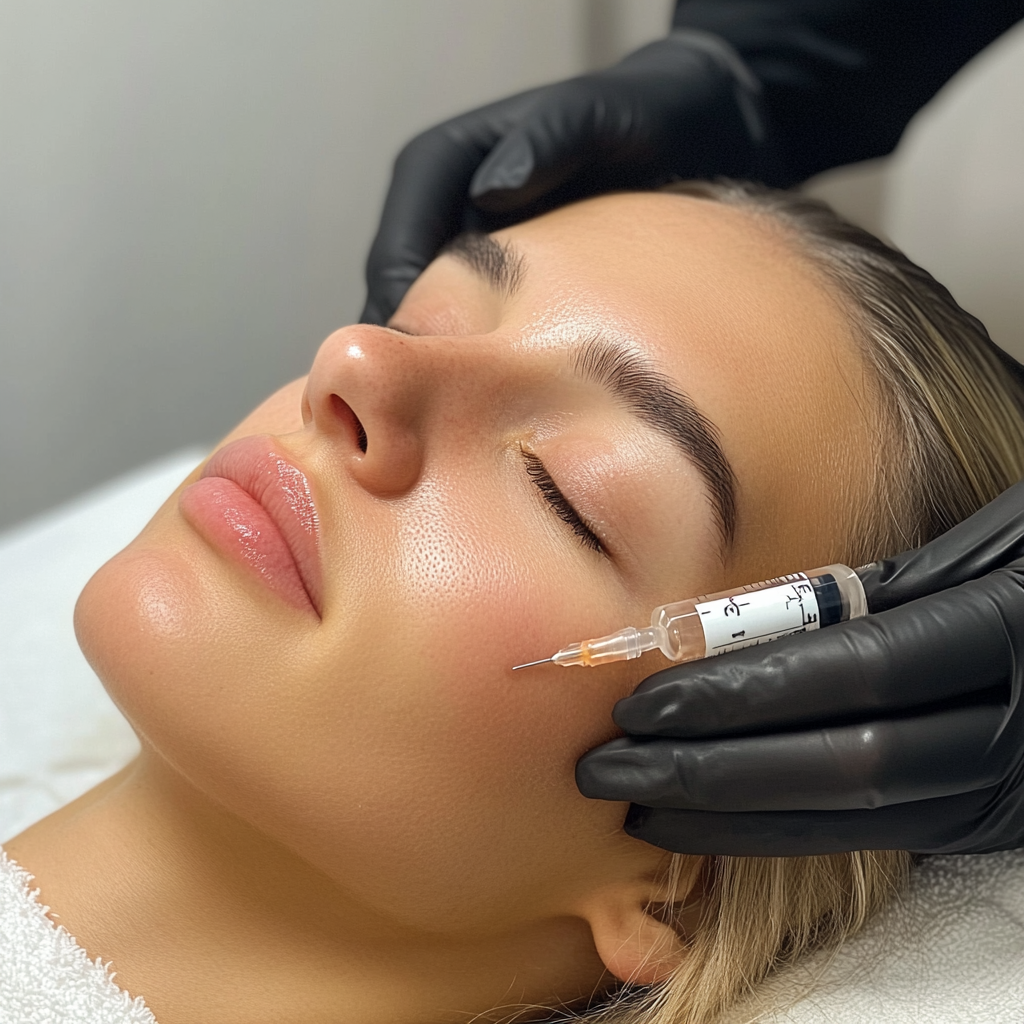
Skin boosters, whether that is Profhilo, NCTF 135HA, Sunekos, or another injectable hyaluronic acid, work by delivering deep hydration into the dermis and prompting your skin to produce its own collagen and elastin over the following weeks.
That process is not passive. It relies on your skin being able to do the work.
If your barrier is compromised on the day, expect:
- More visible bruising and swelling after injection
- Longer downtime, sometimes double
- A weaker collagen response, because inflamed skin prioritises repair over rebuild
- Less glow at four weeks, because the treatment is fighting friction it should not have to fight
Well-prepared skin uses the treatment. Stressed skin absorbs the impact and gives you back roughly 60% of what was possible.
The good news: getting your skin ready is not complicated. It is just uncommon.
The 14-day window: what to stop
Start pulling these back two weeks before your appointment.
Retinoids and retinol
Prescription tretinoin, retinol serums, any resurfacing night cream that lists retinal, retinaldehyde or retinyl palmitate. These accelerate skin cell turnover, which is exactly what you do not want going into an injectable treatment. You need a stable, calm barrier, not a thinning one. Stop 10 to 14 days out.
Strong exfoliating acids
Glycolic, salicylic, lactic, mandelic, PHAs above 5%. Also skip any at-home peels. If your normal routine includes a weekly acid, pause it for the two weeks before. Your barrier needs to be intact, not renewed.
Physical exfoliation
Scrubs, at-home dermarollers, silicone brushes, cleansing devices. Put them away.
Vitamin C in high concentrations
Ascorbic acid above 15% can be too active pre-treatment. If it is a lower percentage and a stable part of your daily routine, you can continue. If it is a new addition or a strong formulation, pause it.
In-clinic treatments that stress the skin
No microneedling, HIFU, laser, or chemical peels in the two weeks prior. These are excellent treatments in their own right, and we often plan them alongside skin boosters as part of a longer sequence, but never back-to-back without proper recovery.
Waxing and threading on the treatment area
Micro-tears are entry points. Give the area three to five days minimum before injection.
The 14-day window: what to start
This is the part most guides leave out entirely.
Barrier-first skincare
For two weeks, your job is to strengthen the skin barrier, not challenge it. Gentle cleanser (no foaming, no acids), fragrance-free moisturiser with ceramides and cholesterol, SPF 50 every morning. If your usual routine is packed with actives, this will feel underwhelming. It is meant to.
Real water
Not “drink more water” as vague advice, but consciously hitting around two litres a day for the fortnight before. Hyaluronic acid binds water. If your body is chronically underhydrated, your skin has nothing to hold onto once the product is in.
Sleep, honestly
Skin does most of its repair work during deep sleep, particularly in the first two hours of the night. Prepping your skin while consistently sleeping five hours is like trying to fill a bath with the plug out. If nothing else, protect the week of your appointment.
Omega-3s
From food or a supplement. Omega-3 fatty acids support barrier function and reduce baseline skin inflammation. Start two weeks out. Pause any supplement form 48 hours before injection (see below).
Sunscreen worn like you mean it
SPF 50, every morning, reapplied if you are outside for more than a couple of hours. Sun-damaged skin heals slower and responds less well to hydration treatments. This is the easiest thing on the list and the one most people ignore.
The final 48 hours
Now we get to the more familiar list, and it does matter.
- No alcohol for 48 hours before. Alcohol thins the blood and increases bruising. This is not a preference, it is biochemistry.
- No blood-thinning medications or supplements where medically safe to pause. Aspirin, ibuprofen, fish oil, turmeric, vitamin E, ginkgo, ginseng, garlic supplements. If you take prescribed blood thinners, do not stop them without speaking to your GP, and please flag this in your consultation.
- No intense exercise the day before or day of. Elevated heart rate and heat right before injection increases swelling.
- Eat before your appointment. Skin boosters are quick and generally well tolerated, but arriving on an empty stomach makes anyone more likely to feel lightheaded during injection.
- Arrive with clean, bare skin. No makeup, no SPF on the treatment area, no serums that morning. Cleanse gently at home and come in.
The mistake most people make
Here is what we see constantly.
Someone books their skin booster appointment, then decides they want their skin to look its absolute best for the appointment itself. So they do an at-home peel three days before. Or they layer on retinol every night for the week leading up. Or they book a facial two days prior “to really deep clean.”
They arrive with a barrier that has been picked apart in the name of preparation.
The result: more redness, more bruising, more downtime, less glow at four weeks. They then blame the treatment or the practitioner. What actually happened is they arrived with skin that was not in a state to receive the treatment properly.
The prep goal is not “best possible skin on the day.” It is “calmest, most stable, most hydrated skin on the day.” Those are different things.
If your skin looks a little quieter than usual the morning of your appointment, no fresh peel glow, no post-facial radiance, you have prepped correctly.
What to expect straight after
So you know what you are building toward:
- Small raised bumps at the injection sites, which settle within 24 to 48 hours. This is normal and particularly characteristic of Profhilo.
- Mild swelling and possible pinpoint bruising
- Slight tenderness for a day
- No visible “wow” result in the first week. Skin boosters are a slow-build treatment.
The real result appears at three to four weeks and continues to develop over eight weeks as your skin produces its own collagen in response. If you have prepped well, that curve is steeper and the final result is stronger.
Aftercare in one paragraph
Because prep sets up aftercare. For the 24 hours after, no makeup, no touching, no heat, which means no sauna, no hot showers, no intense workouts. For the first week, keep skincare gentle. No actives, no exfoliation. Sleep on your back if you can. Continue the water and the sleep. Reintroduce your usual routine gradually from day seven. If you have any concerns, message the clinic. We would rather answer a question than have you Google it.
Where skin boosters fit in a longer plan
At Amara, we rarely treat skin boosters as a one-off. They tend to sit inside a longer sequence, sometimes preceded by a HydraFacial to prep the skin surface, sometimes followed weeks later by HIFU or a course of anti-wrinkle injections to address different layers of the ageing picture. The prep guidance above applies to your skin booster session specifically. If you are building a full treatment plan with us, your practitioner will map the sequencing so that each treatment supports the next rather than fighting it.
That is the Amara approach. Least invasive route, futureproof the skin, results that age well with you.
Ready to book?
If you have read this far, you are the client we like working with. Someone who wants to understand what they are doing to their skin, not just tick a treatment off a list.
Our skin booster appointments at Amara Clinic in North West London start with a proper conversation about your skin, what you use, what you have tried, and what you want to change. From there, we recommend the specific product and protocol that fits your skin, not a one-size-fits-all injection.
Amara Clinic, 665 Finchley Road, London NW2 2HN. Doctor-led care. English and Arabic spoken.
This article is for information only and does not constitute medical advice. Suitability for any aesthetic treatment is subject to consultation and assessment at the clinic.